

Register here for a long-term GeorgeTutor subscription

Why is long-term academic mentoring valuable?

Executive summary: Long-term academic mentoring counteracts poorly delivered courses by personalizing & contextualizing learning.

There’s a cliché that “the best learning is for life”, a truism that rolls easily off the tongue but isn’t at all clear if you stop to consider its meaning. Most people today, and certainly most students, unfortunately think of learning as a contingency for achieving a near-term goal, perhaps to pass a test or to gain acceptance at an institution or to receive a degree at a university. This attitude is understandable in a world in which challenges and needs and methods and solutions are changing incredibly fast, and in which adaptability is therefore considered a key metric for success. However, it completely misses the point that true learning is an exquisite, personal and timeless experience, which is amenable to nurturing but never to force.

a sure solution for learning

in a world of rapid change

You don’t have to look for long to notice the current regrettable prevalence of testing in schools. For many students these days, the whole experience of learning a subject such as physics or mathematics could be described as lurching from one quiz or test to the next, with little time to consider the subject matter in any broader context. Ask a student about this experience, and they’ll almost certainly relate. They may also describe real trauma that they have suffered as a consequence of rapid, test-intensive teaching; and they will probably agree that, weeks or months after a course has finished (usually in the Götterdämmerung of the final examination), they have retained a depressingly small percentage of what the course was supposed to teach. This is hardly surprising in light of the fact that teachers, themselves pressed to deliver to ridiculous agendas, often have to skirt so much foundational or ancillary material that the residue of their curriculum is rendered incoherent. Days missed for staff consultations, teacher training, school system testing, administrative necessities and downright absenteeism don’t make these problems any better.

if you want to learn something well, you should try to learn it more slowly

Some families understandably turn to tutoring to try to navigate these situations, particularly when the speed of their children’s courses outflanks what the parents can remember from their own days at school. For some students, subject tutoring can be enough to accelerate their progress and to compensate for some of the gaps in a course, but, all too often, this merely serves to qualify the student for entry into the next, more advanced, course. Eventually, and especially with structured subjects such as math and science, the Peter Principle of “rising to one’s level of incompetence” takes hold, and the student’s rate of learning can become seriously degraded. This is the sad consequence of racing through earlier curricula in the mistaken belief that faster is better.

Educational literature and social opinion are in solid agreement that, if you want to learn something well, you should try to learn it more slowly. All competent teachers know the time-management techniques that really work. There are spacing effects, whereby you allow time for concepts to take root in students’ minds; spiral learning, where you build understanding incrementally over time by orbiting between topics; and “just in time” introductions, through which you carefully synchronize the curriculum to support the student’s next topic needs. Naturally, these are the first techniques that go out of the window when students and teachers are under extreme time pressure to complete the units of a course by a particular date.

One of the most positive pedagogical developments in recent years has been the recognition that students each have unique characteristics in the ways that they learn. I define long-term academic mentoring to be a fusion between ordinary tutoring, highly personalized teaching delivery, multi-subject support, and the deliberate suppression of the short-term attitude. My own version of long-term mentoring often involves a 2-4 year engagement with a student, typically spanning their learning from middle school through to university, and offering a sense of continuity across several academic subjects. In those years, you can sadly guarantee that the student will experience the rapid delivery and content incoherence that I described above, but you can hope to do something to guard against their worse impacts on the student’s learning potential.

true learning is an exquisite, personal and timeless experience, which is amenable to nurturing but never to force

Long-term academic mentoring establishes a shared dialog with a familiar vocabulary and a learning pattern based on the student’s personal learning preferences. It can counteract confusion in a current course by reminding the student of things learned long before. It can overcome some of the panic and trauma of poorly-delivered courses by representing the course content in a more familiar and tailored way, with proper consideration not only of the context of the subject matter, but also of the student’s current, past and future learning interests. It can pre-empt low grades, by ensuring that the student stays with or even ahead of the course material. More particularly, long-term mentoring supports the student with a figure who may be lacking in their school: a dependable adult person with deep educational expertise, specifically interested in helping that student over a period of many months or years. The mentor can be relied upon to see the student through the short-term shocks, and to help the student stay on a long-term learning path that is likely to foster deeper understanding and much better retention. Thus, long-term mentoring is uniquely positioned to inculcate learning habits and learning skills in the student, to show the student how to work through the inevitable short-term crises at school, to guide the student to learn in ways that work best for them, and to equip the student to learn how to learn more in the future.

The bottom line: Long-term academic mentoring is a sure solution for learning in a world of rapid change, because, properly delivered, it invests students with self-awareness, confidence and adaptability that the fast-moving future will demand, while protecting them from the dangers of excessive speed and testing in the short term.

Storylines and side quests in higher education

Executive summary: Decisions about college may be assisted by students’ prior experiences in virtual reality and metaphor.

Conventional wisdom suggests decisions about college and what to study there will be among your biggest challenges before you’re 25-30 years old. Questions and essay prompts on college application forms set the scene: What context do you want for your higher education? What existing characteristics will you bring? What skills are you hoping to develop? How will you interact with others? What roles and teams will you embrace? How much curriculum freedom do you want? What is your preference for pacing? Will you specialize early or do you want optional courses on the side? These are tough real-world life choices.

But if you got past the title of this blog post, chances are you’ve made similar choices before. Today’s college applicants bring unprecedented levels of experience to life’s questions, not necessarily through exposure to the “real world”, but through the new dimension of virtual realities. Whatever Gen Z will choose to call themselves, their accession to higher education is now in full swing, and I for one look forward to the day when this wonderful cohort will rule the planet. They are a poetic generation, forged in full awareness of alternative realities: they will be the bards and blacksmiths, jailers and jesters, monks and mages, farmers and apothecaries of the future. Under their guardian shields, the world of 2030 and beyond will be in safe and wise hands.

unless you are at home

in the metaphor, … you are not safe anywhere

Robert Frost, Education by Poetry, 1930

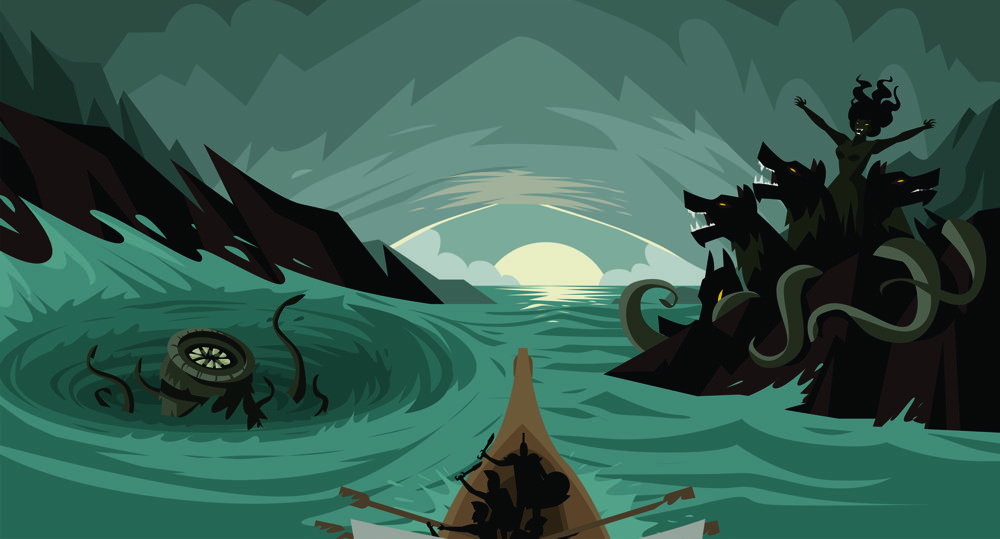
Back in 1930, the poet Robert Frost wrote a remarkable short essay, timeless but by no means easy, entitled Education by Poetry. At one point he recalls Odysseus laboring over the ocean, until an island appears on the horizon “like an inverted shield”. The idea of an Odyssey and the metaphor of arrival at a place offering protection, sustenance, reinvigoration and resupply is a universal image. Gen Z might call it a meme. Whatever else he might have thought of Gen Z, Frost would probably agree that today’s college applicants understand the metaphors of the Odyssey and of the shield just as keenly as did the heroes of old.

Amazingly, Frost himself never acquired an ordinary university degree, though he scored a record number of academic honors later in life. Anyone looking for a soaring survey of what education is (or could be), with frank comment and deep insight into the mental set we ought to adopt as learners, might embark on Education by Poetry for inspiration.

So, how does all this help you make decisions about your higher education? Well, if you’re thinking that comparing the relative merits of (say) Cal Poly and UCLA is an outfacing decision, I want to point out that it’s really no more complicated than choosing between (say) Assassins Creed Odyssey and Skyrim. (For the uninitiated, these are two leading examples of computer-based role playing games – RPGs – and quite possibly represent the highest skill factor exhibited by many of today’s college applicants.) If I ask you “AC or SR”, you’ll probably have strong opinions, plenty of thoughts on pros and cons, and basically a lot to say. Easy conversation!

AC is Ivy League. You can choose your context, but once you’re committed to Origins or Odyssey or (dare I say it) Valhalla, transferring out is going to be tough. You’re somewhat fixed as to storyline: you’ll likely be served up with tried and trusted pathways through well-established, respected curricula. There are fewer optional paths, fewer side quests if you like, and these detours tend to bring you back fairly quickly and safely to the main storyline. The technical delivery will be superb, the map enormous, the levelling fairly dependable, and the pacing fast! You’ll meet lifelong comrades in your trireme or nordic barrow, and after you level up to graduate you’ll probably all look back on somewhat similar but very happy and productive experiences.

What context do you want…

what roles will you embrace?

SR is Big School. The options are incredible, and it’s largely up to you to define yourself and your path to success. Apart from the obvious imperative to play by the rules of the game, there is almost no need for conformity. You decide on your role, you can almost infinitely “mod” your character, your equipment, your goals and your geography. Taken individually, your courses will be highly competent, offering a lot of detail. You’ll be somewhat able to determine your pace, but you’ll walk every step of the way and you’ll be responsible for making coherent sense of the whole experience. And beware! The side quests are insane, and may hijack you altogether. The cheat codes are plentiful. There are more glitches. You’re more likely to ragequit!

This doesn’t mean AC is without complex distractions. For example, the “Legend No More” side quest in Odyssey lets you confront your nemesis, Roxana. Now, unless you previously romanced Roxana in the “Foot Race” side quest, at this point you’ll probably want to kill her and loot her body to get her famous shield (to sell it for 3000 drachmas or to drop it at the feet of the goddess Athena, whichever you prefer.) In the RPG paradigm, whatever our path, we carve out our own success, take our own risks, choose our own friends, find our own shields, make our own decisions and manifest our own destinies. The virtual generation is great at all this. They are going to find academic decisions relatively easy.

I worried while writing this article that readers may find it too metaphorical. Perhaps some will misunderstand or even disagree with the thesis that virtual experience can supply real-world wisdom. But others (you know who you are!) will get the connection and will (I trust) be able to use it to make better choices in their real-life quests for higher education.

Regarding how far you can take this, Frost waxes Delphic. Let’s give him the last word:

All metaphor breaks down somewhere. That is the beauty of it. It is touch and go with the metaphor, and until you have lived with it for long enough you don’t know where it is going. You don’t know how much you can get out of it and when it will cease to yield. It is a very living thing. It is as life itself.

The bottom line: Skills earned in all contexts, including in virtual realities and role playing games, may be directly useful in making your decisions for higher education. Don’t shy away from metaphor – it may be your strength and shield in your upcoming academic challenges.

Calculus or Statistics – Which to choose?

Executive summary: Apparently unrelated personal preferences may guide the difficult choice between calculus and statistics.

Explore your limits or take your chances. Neither is comforting advice when faced with a tough decision. Yet these are the options that about a million students are given each year in the US as they grapple with a notorious choice: calculus or statistics?

If you like explosions, you’ll love the stats on AP Stats. Since AP Statistics was introduced 25 years ago, its enrollment has grown to surpass Calc BC’s by 50%, and another 50% surge in the years ahead will likely take it past Calc AB’s. For homework, run the numbers, and you’ll see this is a significant rate of change! Meanwhile calculus courses remain a steady staple at high schools, colleges and universities, with maybe three-quarters of a million Americans taking some type of calculus class at any given time.

Will my later career
really be enhanced by the choice I make today?

Partly because statistics is perceived as a replacement (an easier alternative?) for calculus, and partly to keep the cognitive load under control, few students take both calculus and statistics, and fewer still take both simultaneously. This is a pity, because the two disciplines are (or at least should be) intertwined. Statistics without calculus is somewhat elementary, austere and simplistic. Maybe that’s the idea!

There’s a lot of great, expert advice available online about choosing between calculus and statistics, including very helpful insights from professional mathematicians and brilliant university educators for whom I have tremendous respect. I would recommend anyone faced with this choice to dip into some of these writings, as they are offered by strong intellectuals with profound personal experience of both subjects.

The treatments I have found seem to dwell on three main angles.

Firstly, almost everyone gives competent (or better) descriptions of what the subjects are. We learn that calculus is the mathematics of quantities that change, taking us to infinitesimal limits to deliver useful results in the real world. We learn that statistics is the mathematics of managing data, harnessing notions of probability to power inferences about large sets. Great, but I worry that these summaries don’t really tell you much: frankly, you would have to do the courses to properly understand what the summaries mean.

look closely at yourself to help make this decision

The second type of advice focuses on the relative difficulty of the two subjects, often gently slanting you towards statistics if you want the “easier” option. One day I’ll devote a whole essay to this, but, as anyone who knows me knows, I have difficulty with difficulty. What is difficulty? Where does it reside? Is it one-dimensional? What does it mean to say one thing is more difficult than another? Would everyone agree? In 2019, the mean scores for Calc AB and Calc BC were 2.97 and 3.80 respectively, while the mean for AP Statistics was 2.87. Which is more difficult now?

The third main mode is to discuss the perceived value of calculus versus statistics for the later studies and careers of the students who take them. Careful readers may discern a certain teleology in this approach. Will my later career really be enhanced by the choice I make today? Should it be? Might my confidence in later life be improved by my choosing (say) calculus today, discovering I don’t like it, then marching forward into a great future where I use statistics every day? Again, it’s imponderable.

I would advocate a different approach – look closely at yourself to help make this decision. If you love shape, symmetry, geometry and design, and if you appreciate metaphor, consider studying calculus. On the other hand, if you like people, organization, information and prediction, and if you respect precision in language, then statistics may be a better match for you.

The bottom line: Modern gurus give great guidance on this important question, but perhaps the sages – St Francis, Emerson, Thích Nhất Hạnh to name but three – have it right: The Answer Lies Within!

Is it true I shouldn’t learn by rote?

Executive summary: Rote and memorization are good habits that should be encouraged for long-term learning and personal growth.

The trouble with approaching this question is that it may take us near (or directly through) a veritable bees’ nest at the psycho-political edge of educational theory! I’m going to side-step the semantic hornets and answer as practically as I know how, from experience and from the heart. You’re a learner, you were born with a brain, you want to use your resources to the full when you learn, and your brain is equipped with memory. Of course you should use it!

Naturally, it would be silly to be “all RAM and no CPU”, so one wonders if there’s a balance to be found between information retention and processing power, and, if so, how does this balance promote “better” learning?

Don’t let anyone tell you it’s bad

to commit things

to memory

Is it ever useful to “learn” something by heart? I’d argue that it often can be. Our minds work in mysterious ways: how often has a trivial fact risen, unbidden, in your awareness, and enriched a conversation you were having? The spontaneity of memory can fuel wonderful, divergent inputs to our thought processes. We don’t know why (perhaps we never will).

I’ve learned never to disparage a sudden memory. Appropriate memories can increase the available options in decision-making, and often characterize active, zany, parallelistic thinking. Random recall may be what spurs the ground-breaking ideas and surprising connections that are hallmarks of modern thought leaders.

…your brain is equipped with memory. Of course you should use it!

I have vivid memories of situations, places, events and people, along with physical principles, fragments of songs, learned facts and rudimentary rules, that offer me an abundance of apparent truths and heuristic connections. What is remarkable is that these memorized elements haven’t simply lain unprocessed over 50-60 years; they seem to have formed an active substrate, and a subliminal habit of recall and reprocessing has empowered me to learn more from them. In other words, my understanding grows in the light of my own memories.

So, how does one acquire these memories? Well, of course, many memories are stored without much effort (learning at its best!) But occasionally you’ll encounter an idea, maybe enshrined in an image or wrapped in some words, which you find beautiful at the time. Perhaps your instinct will be to commit this to memory. It’s important to point out that you shouldn’t do this mindlessly, but equally that it’s ok to memorize something you don’t fully understand (do we fully understand anything, after all?) I feel that it’s just fine to remember something that I like and that I want to understand more deeply; in time it may settle and grow in my mind.

As I write this paragraph, I am sitting on a bench in late afternoon sunshine, looking out over a lake, and I’ve suddenly recalled some lines of Tennyson:

I am a part of all that I have met;
Yet all experience is an arch wherethro’
Gleams that untravell’d world whose margin fades
For ever and forever when I move.

The bottom line: Don’t let anyone tell you it’s bad to commit things to memory. Go ahead and try it for yourself: learn a Shakespeare soliloquy, memorize 100 digits of π, recite the US presidents in reverse order, if you want to. Then (give it time) make up your own mind whether it’s helpful or not.

Why learn anyway? – Why do we do it?

Executive summary: Experience suggests that learners do best when learning about themselves, and that this is why we learn.

It’s easy to imagine that everybody learns for essentially the same reasons. At school, the ostensible reasons for being there and doing the work can appear somewhat monochrome: I attend because they make me; I do what everyone else does; I do it for my family; It will be good for me; What else would I do?

Please don’t misunderstand me: I realize that there are many great students whose motivations are much less shallow than these. I’m simply observing that the reason (or reasons) that we learn are not particularly well defined.

learning is best directed when it empowers us

to learn more about ourselves

You’ll sometimes hear people say “I learn because I enjoy a challenge” – these folk might agree with the metaphor of learning as climbing a mountain. Perhaps we do it for the exercise, the great views on the way up, the muscular euphoria, or the exhilaration of reaching the top?

Others value the knowledge that learning can bring, the wisdom that it delivers over time, the self-affirming sense of deftness that comes from doing something the “right” way. For the solipsist, it’s more about the cave than the mountain!

Many learn in order to improve their preparation, to enhance their possibilities, and to be ready for what life may bring. This viewpoint comes complete with a vision for the future, and a sense that learning is “successful” when it matches that aspiration.

I’m sure there are others who don’t think it matters why we learn. You can imagine a perspective that argues learning is part of our biological condition, the tip of a pyramid that was founded in our primitive evolution, was built upon while we emerged as a species, was amplified during our personal physical growth, and that finally topped out in the development of our individual identities (or perhaps in the expression of our transcendent extensions).

Learn to learn more about yourself. It’s why we learn…

Faced with the question “Why do we learn?”, it is tempting to take refuge in weak reasoning. An example would be to respond “All of the above”. Such a response trivializes the learning spirit that is surely one of the most exquisite facets of human character. Another dead end (fruitless because it’s so obviously true) is the recursive idea that we learn in order to learn more. Yes, of course, but why?

The resolution that works best for me, and seems most in tune with my own practical engagement with learners, is that learning is best directed when it empowers us to learn more about ourselves. Whenever we bring fresh observations of the world around us and process them by reference to what we think we already know or understand, the action informs us of who we are. A self-learner, in this sense, can be the masochist on the mountain, the solipsist in the cave, the visionary optimist, the biological fatalist, or any combination, while building skills to learn more in an idiosyncratic framework .

The bottom line: Learn to learn more about yourself. It’s why we learn, and it’s why we all appear to learn differently.

What do I do if I’m unsure what to study?

Executive summary: If in doubt about what to study, pick mathematics, English, a language, a science and an art.

One of the great privileges, and challenges, of learning in our times is choice. Compared with learners 50 years ago, students enjoy far more curriculum options today, but many students in the 2020s will tell you they aren’t sure what to study. What happened to knowing all your life what you wanted to be?

If you’re

not sure

what to learn,

learn the basics

Well, in part that was always an illusion; but to the extent that it’s real, the problem is related to the type of options on offer. Your school days are an extraordinary opportunity to receive an academic grounding. In most traditional school subjects, this means climbing a staircase of concepts, principles, laws, experiences, tests, and (yes) errors.

You’ll hear it said that school days are indeed an opportunity, but that they are principally an opportunity to prepare yourself for your life and career ahead. I would suggest you downplay that viewpoint. If you focus on fundamental subjects, I believe you can build your productive potential while keeping your later options open. If you specialize too early – and I’m referring to taking more “applied” subjects at school – you’ll have the sensation that you are preparing for the “real world”, but in fact you’ll find your options narrowing.

Be careful of courses that offer skills in project management, technical writing, business theory, modern political themes, etc. They may be rich in skills and ideas that you can easily pick up later. If in doubt, embrace a core syllabus of fundamental subjects: mathematics, English, a science, a language, an art. If such a syllabus can teach you some relatively ageless principles, in a structured, coherent and interesting way, giving you the chance to receive, process, retain and express thoughts in a variety of contexts, it will prepare you excellently for the life and learning that lie ahead.

The bottom line: If you’re not sure what to learn, learn the basics. Pick the “old-school” subjects, and sharpen yourself on what they have to offer. There is time enough to harness your learning to specific applications later on.